Orwell's Animal Farm Returns to Center of Political Debate
George Orwell's 1945 allegory of the Russian Revolution has become a flashpoint for disagreements over capitalism, corruption, and power concentration in modern democracies.
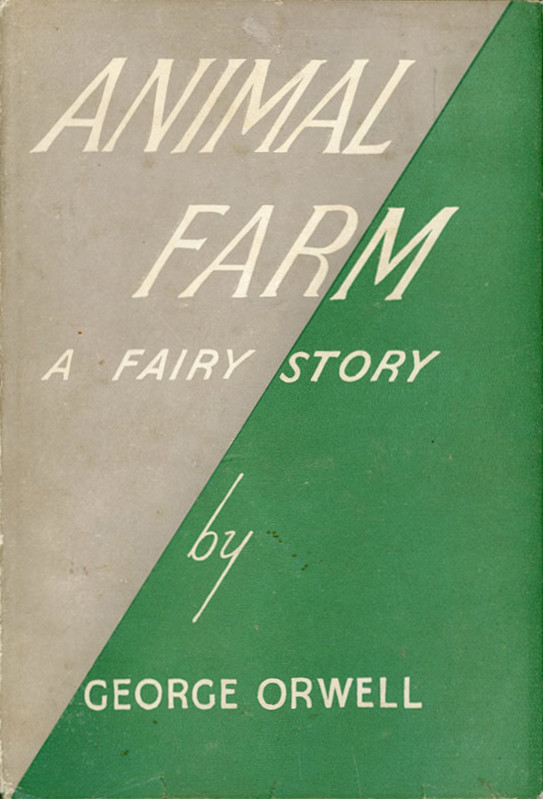
George Orwell’s Animal Farm, published nearly 80 years ago as a critique of Stalinist totalitarianism, has resurfaced as a touchstone in contemporary arguments over corporate influence, government corruption, and economic systems.
The novella, which uses farm animals to represent figures in the Soviet revolution, depicts how revolutionary ideals become corrupted by those who seize power. Its most famous line, “all animals are equal, but some are more equal than others”, has taken on new resonance in debates about modern inequality.
Observers across the political spectrum have drawn parallels between Orwell’s fictional farm and current conditions. Some point to corporate consolidation, lobbying influence, and the revolving door between government and business as evidence that power has become as concentrated as it was under the regimes Orwell condemned. Others argue that Orwell’s work serves as a warning against expanding government authority, which they contend creates the conditions for abuse regardless of stated ideological goals.
A key flashpoint involves the 2010 Supreme Court ruling in Citizens United v. FEC, which granted certain First Amendment protections to political spending. Critics describe this as legalizing bribery and enabling corporations to exercise outsized political power. Defenders counter that bribery preceded the ruling and that reducing federal authority itself is the answer, since corporations cannot exploit power that doesn’t exist.
The debate reflects a broader frustration with institutional capture. As one observer noted, “the system is essentially run by both sides being owned by the same interests”, a sentiment echoing Orwell’s depiction of revolutionary promises curdling into oppression by a new ruling class.
Historians note that Orwell, himself a democratic socialist disillusioned by Soviet practice, wrote Animal Farm precisely to distinguish between totalitarian communism and his preferred left-wing vision. The book’s enduring purchase lies in its universal lesson: that concentrated power tends toward corruption regardless of the system’s founding principles.
The ongoing disagreement reflects no consensus on solutions, only agreement that the problem is real.
← Back to home