Nazi Germany's Ambivalent Courtship of Indian Independence
Adolf Hitler recruited Indian soldiers and met with independence leaders, yet remained skeptical of Indian self-rule and ultimately viewed the subcontinent as a strategic pawn rather than an ally.
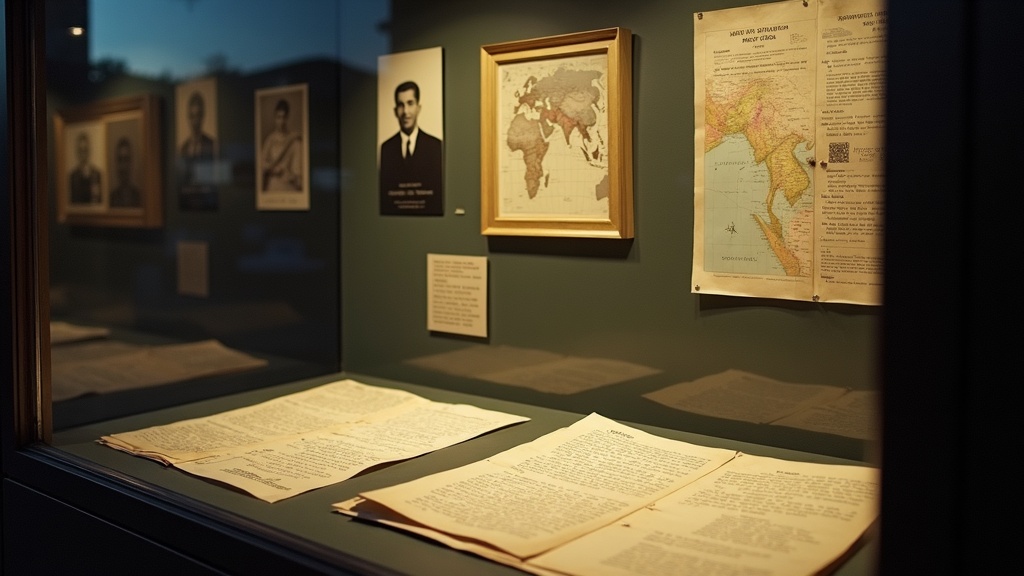
Nazi Germany’s relationship with Indian independence during World War II was a study in tactical expediency clashing with ideological conviction. While the regime recruited Indian soldiers and entertained negotiations with nationalist leaders, Hitler himself remained deeply skeptical of Indian readiness for autonomy.
Subhas Chandra Bose, a prominent Indian independence activist, escaped to Berlin in early 1941 seeking Axis support for an Indian government-in-exile. After months of difficulty securing meetings, Bose finally sat down with Hitler on May 29, 1942. The encounter proved disappointing. According to accounts of the meeting, Hitler spent much of it monologuing and expressed grave doubts about India’s capacity to rebel against British rule. His core concern was geopolitical: he feared Soviet occupation of the subcontinent and insisted that any German action in India would first require conquering Russia, as the “road to India” ran through Soviet territory.
Despite these reservations, Germany did pursue limited Indian collaboration. A propaganda operation emerged, including anti-British radio broadcasts and recruitment of Indian prisoners of war into the “Free India Legion,” a unit incorporated into the Waffen-SS. By January 1942, Nazi planners had even drafted a scheme to partition the Indian subcontinent between Axis powers following a hypothetical German victory: Germany would control the western regions (modern Pakistan), while Japan took the east.
Yet Hitler’s private assessments contradicted any genuine commitment. In a March 1945 conference, he dismissed the Indian Legion outright, reportedly calling it “a joke” and questioning whether Indian soldiers possessed the stomach for combat. He suggested they would only be useful for “turning prayer mills.”
Historians note that Nazi recruitment of Indian troops reflected pragmatic wartime necessity rather than ideological alignment. Germany sought to destabilize the British Empire and extract intelligence value from nationalist sentiment. Bose himself eventually relocated to Japanese-occupied Asia, where he found more concrete support for his independence ambitions.
The episode reveals how totalitarian regimes often subordinate racial or ideological doctrine to immediate strategic interest, particularly as military fortunes decline.
← Back to home